The Ultimate List of Fun PE Games for Primary Schools
Give your physical education provision a boost with these energising and inclusive PE games
At Premier Education, we know the importance of keeping your PE classes fresh with new games to play and different skills to explore. We’ve put together this list of fun, flexible and engaging games to add to your inventory and help you breathe new life into your physical education lesson plans.
This list offers a variety of unusual and imaginative indoor and outdoor games that cover all five types of PE games: athletics/gymnastics and dance, invasion, net and wall, striking/fielding, and target games.
Each game gives students the opportunity to learn and build on their fitness levels, motor skills, and teamwork.
With straightforward rules and requiring minimal kit and setup, these games are streamlined so that you and your students can get the most out of the time you have for your PE sessions.
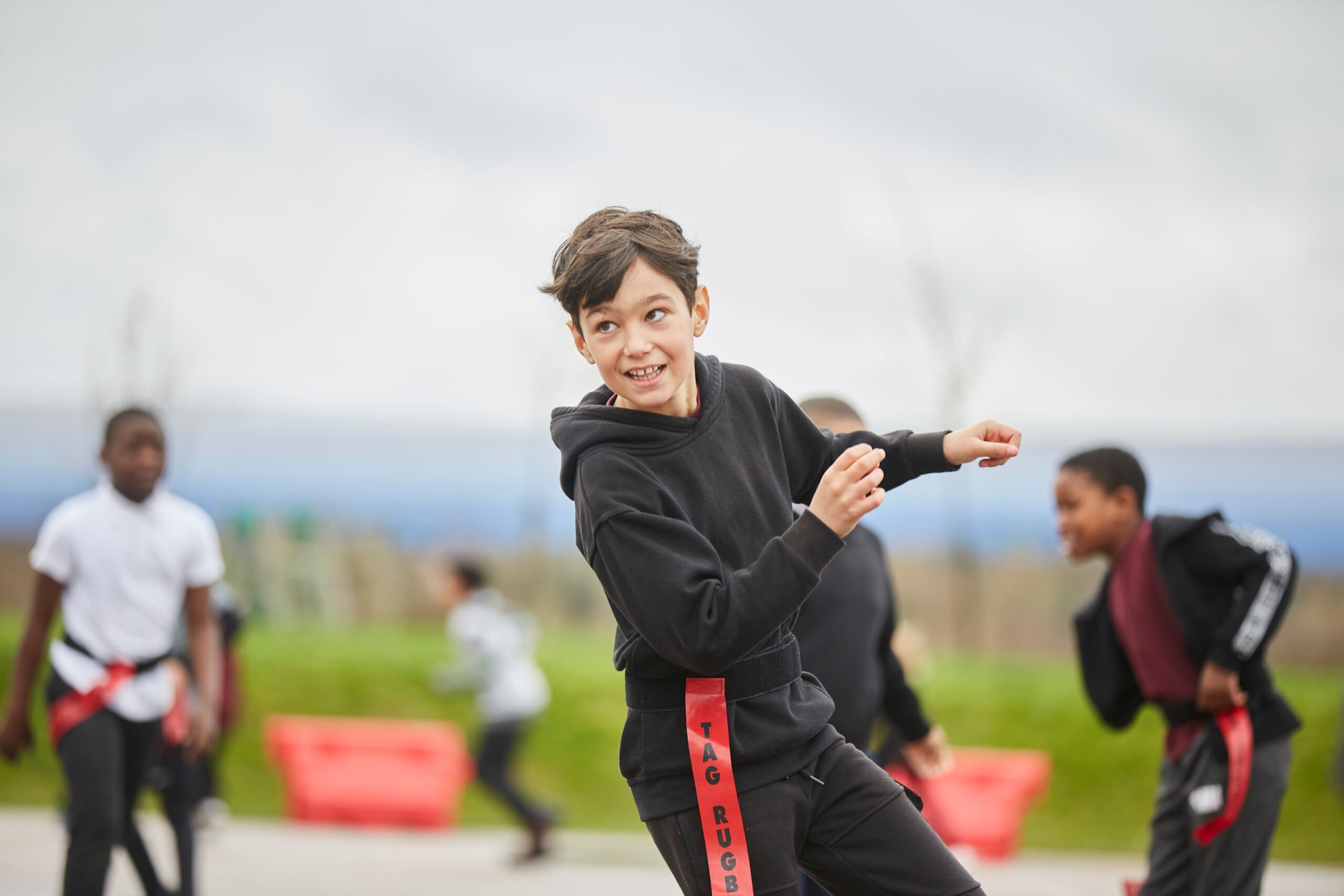
Games to engage and inspire everyone
Most of these PE games can be adapted to suit particular primary school age groups and enable students with physical or educational needs to participate, challenge themselves, and have fun.
Familiarise yourself with the needs of specific children in your class; they may need to work in pairs with another child for support, or manage certain skills differently (such as rolling a ball instead of throwing it).
The list covers a range of different skills, and includes ideas for motivating PE-resistant students and challenging those who already enjoy the subject.
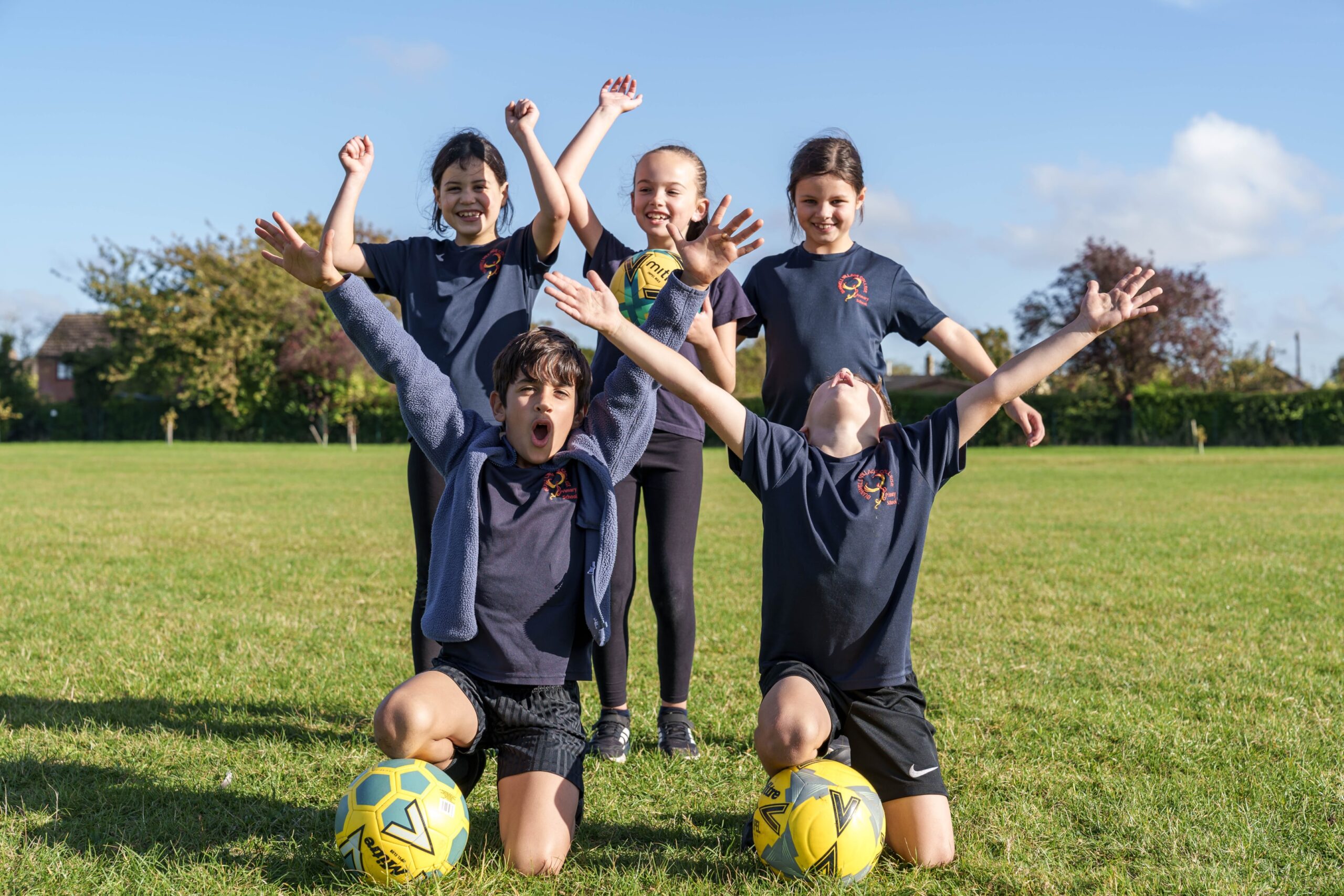
Getting started: 3 great PE warm-up games for activating minds and bodies
Beginning a PE session with a simple, swift and fun PE warm-up game will help loosen up muscles, raise energy levels and engage brains.
Warm-up 1: Switch
Similar to Musical Chairs, Switch is a game of quick reaction times, played on a square.
Use court markings or mark out a square about the size of one-half of a badminton court using cones or tape. You’ll also need to mark the centre of the square.
The game starts with one student on each corner of the square, and one player in the middle. The remaining students line up in front of the square.
When the person in the centre shouts ‘Switch!’, all four corner players must race to a different corner. The central person must also try to get to a corner.
Whoever is left without a corner to stand on joins the back of the line outside the square, and the person at the front of the line steps into the centre. Continue until everyone has had a turn.
Warm-up 2: Mirror mirror
Music is a great way to raise energy levels and engage students who may not initially feel like participating. Put on an upbeat track and lead the class in a warm-up involving simple stretches and dance moves of your choice. The class copy your movements in time to the beat. Movements can be silly or serious, simple or complex.
After you have done this for a few moments, you can invite a student to come and lead the next minute of this warm-up.
Warm-up 3: Quickfire catch
Two students throw a foam or rubber ball back and forth between them, counting to see how many consecutive catches they can make in one minute without dropping the ball.
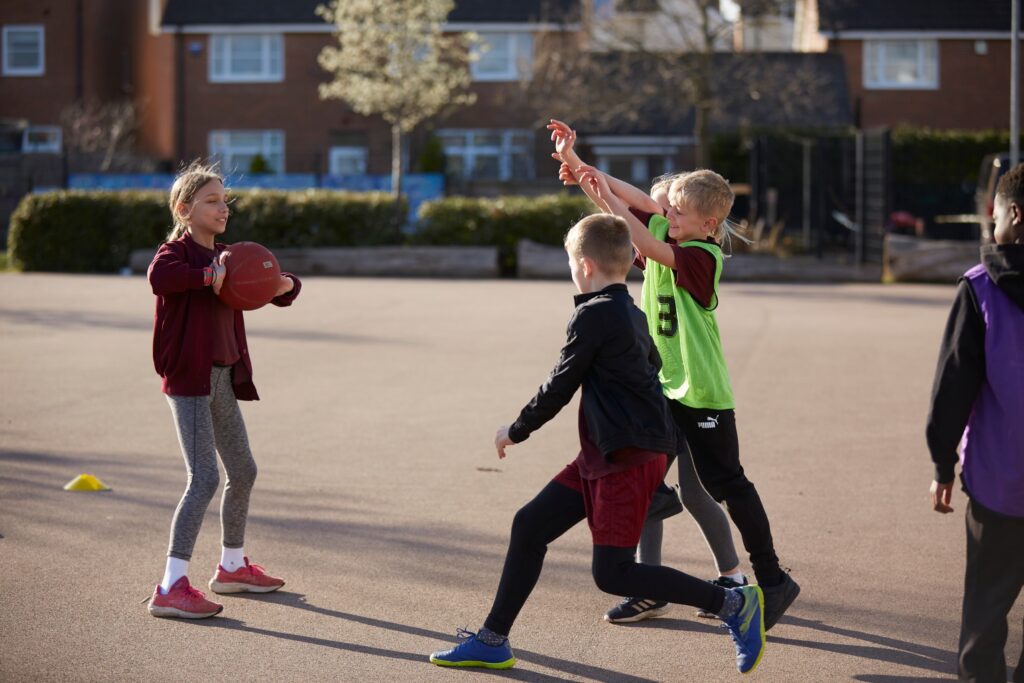
8 brilliant PE games for primary age kids
Each PE game on the list features a specific learning objective or skills focus for you to encourage your students to explore and expand upon.
Game 1: Obstacle course
A gymnastics skills-focused game with high flexibility to suit all needs
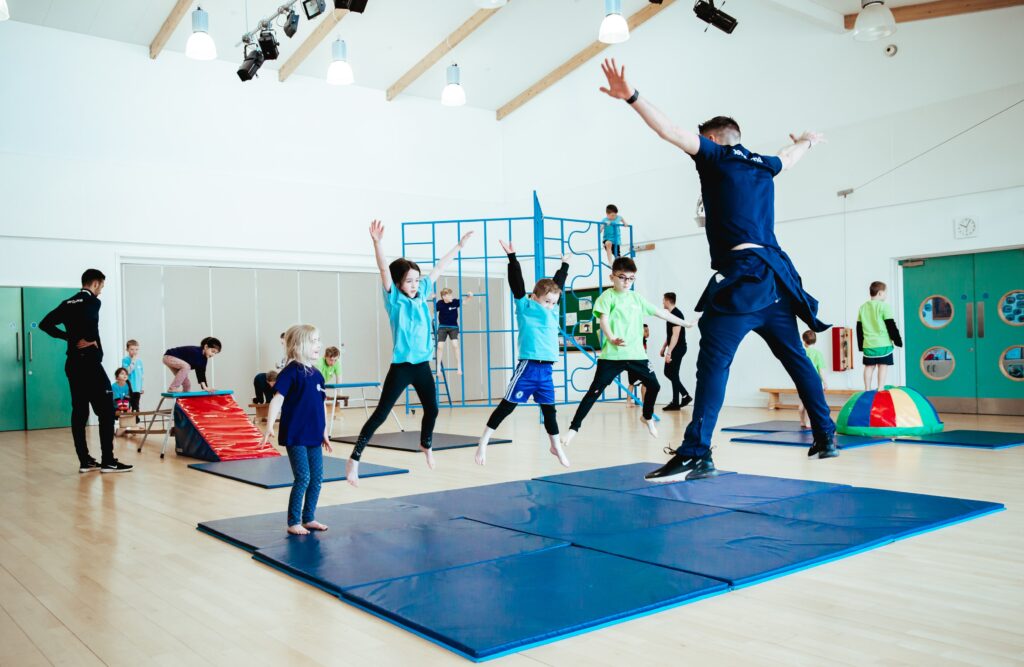
Set up an obstacle course using a mix of cones, hula hoops, mats and gym equipment. Lay out several different courses to minimise the time that children are waiting for a go. The objective is to complete the obstacle course with a focus on improving your own personal best time, rather than on competing with others.
One course might involve balance, jumping, and weaving, another might focus on throwing a bean bag into a bucket, lifting a hoop over your body and performing a roll on a mat. Give children a set time in which to see if they can beat their own personal best time on their obstacle course of choice.
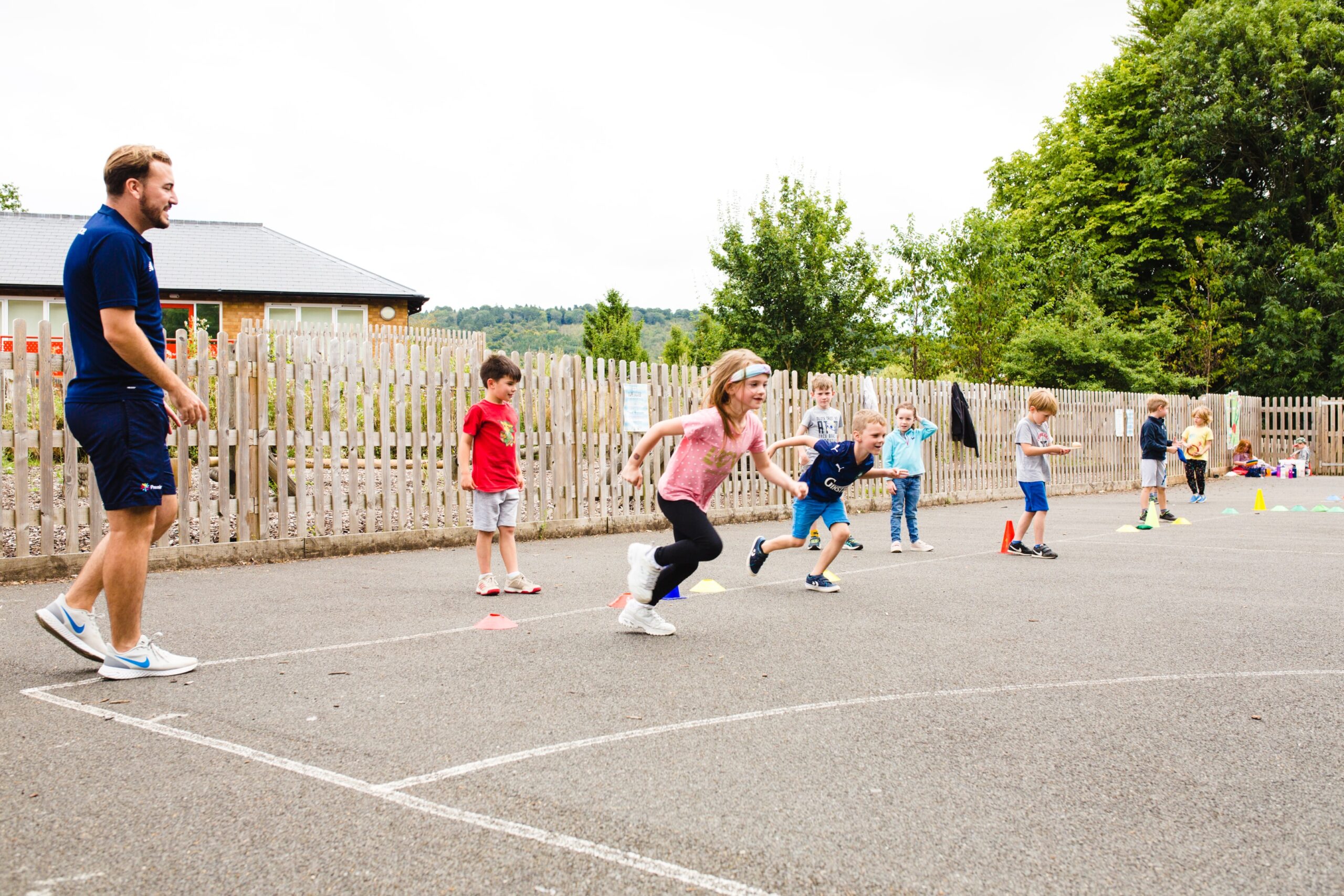
Game 2: Team skittles
The precision and coordination of bowling in a team context
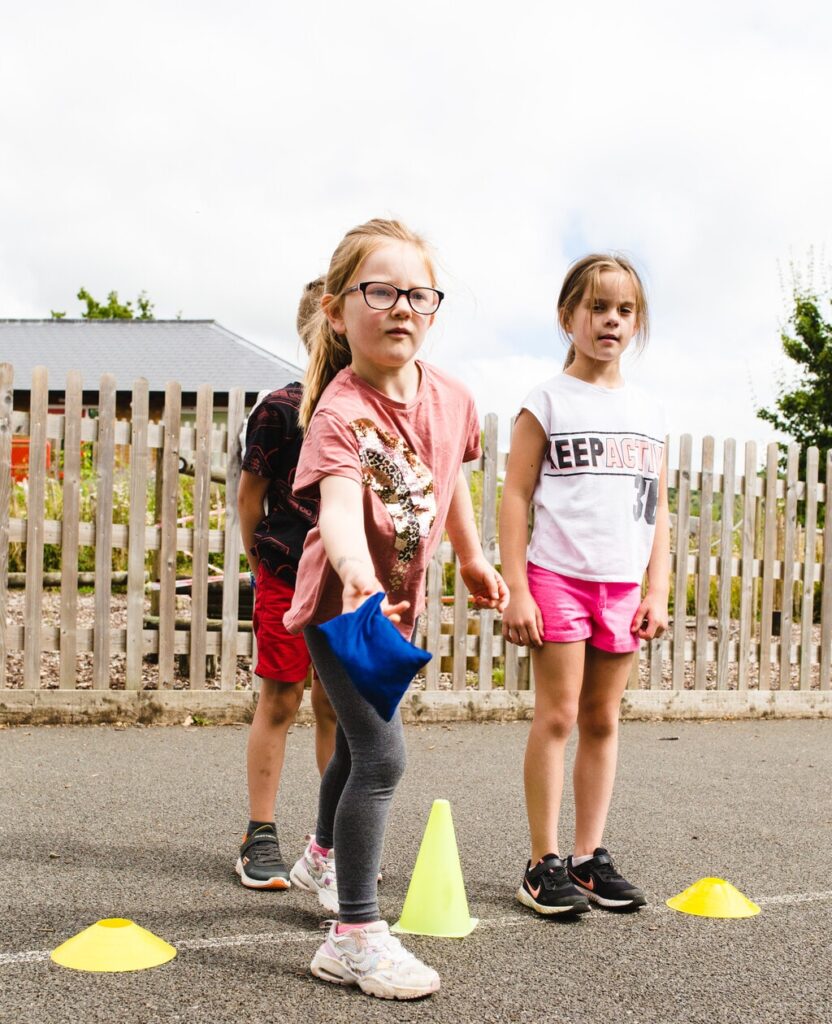
This is an invasion game inspired by ten-pin bowling. Divide the class into two teams. Each team has a series of 10 skittles or pins to protect while also trying to knock over the opposing team’s skittles. The first team to knock down all of the other team’s skittles wins.
This high-speed PE game focuses on throwing at a target and deflecting the ball from striking your own skittles. The teamwork aspect makes it more complex but also more fun, and allows for students who are still learning how to throw with accuracy to explore the skill supported by teammates.
Game 3: Dice dance
Creating movement patterns together
This dance-focused PE game blends creativity with movement. In small groups, children assign a specific dance move, stretch or physical activity to each number of a die. They take it in turns to roll the die and record the numbers. They then create a routine based on the numbers they’ve thrown, and the movements they pre-assigned to each number.
At the end of the game, each group will have a unique dance sequence to share with the class.
Game 4: Boxes in a row
This target game allows children to adjust the difficulty level to suit their progress
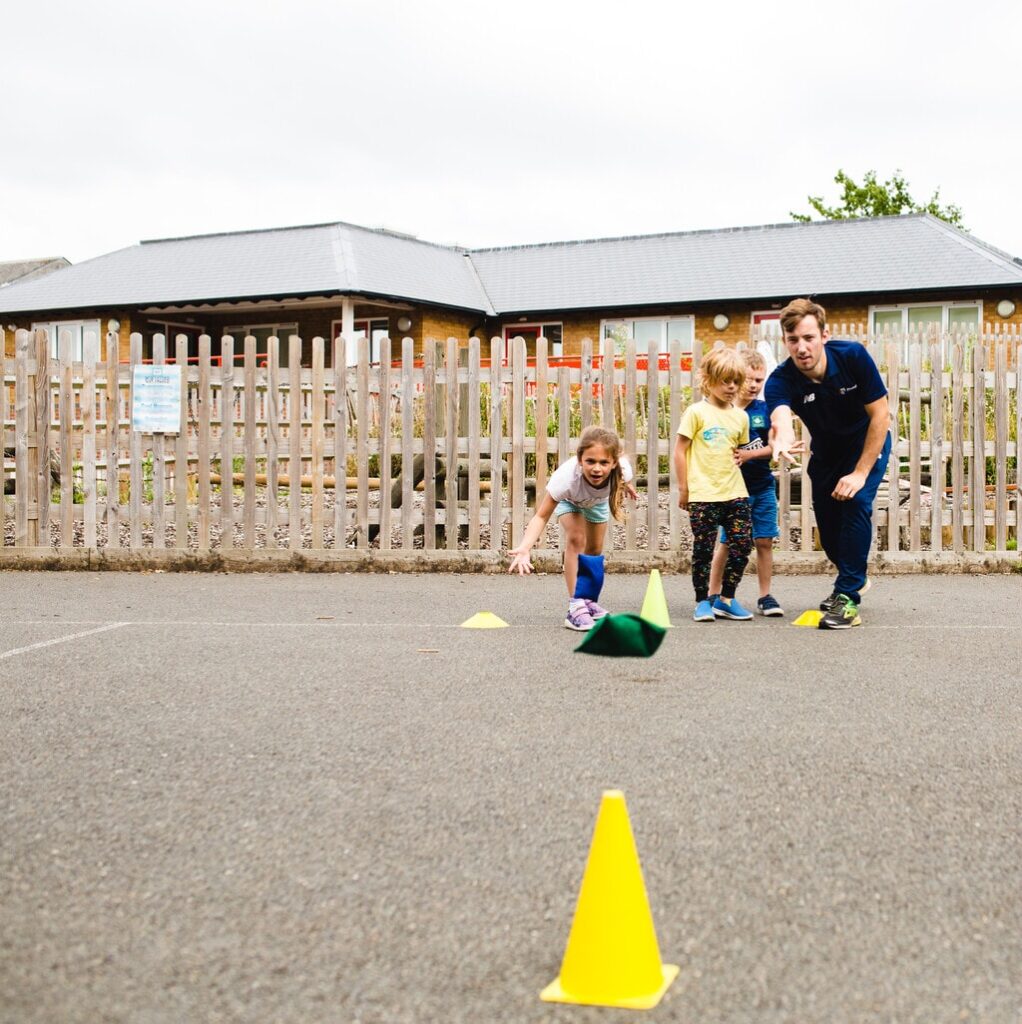
For this PE game you’ll split the students into groups. You’ll need up to four containers – boxes, buckets, hula hoops, or other receptacles – and one soft ball for each group. The children line up their four containers in order, starting with the largest.
Standing on the start line, which should be about a metre from the first container, they take it in turns to throw the ball into the first container, and then into the second, then the third, and finally the fourth.
If they find it easy, next time it’s their go, they move the containers further apart. If it is too tricky, move the containers closer together next time.
Support the children to encourage one another to push themselves and see how far apart they can space their containers and still get the ball to land in the right place. You can also run this PE game as a competitive relay between teams, with each player throwing the ball into all four containers in turn before passing it to the next player.
Game 5: Noodle hockey
High-speed, low-impact fun
This can get quite competitive, but the team element keeps things grounded. This target game gives students the chance to practise bat and ball skills, running, and in-play communication. You’ll need a medium-sized soft foam ball and enough pool noodles for all students.
Split the class into two sides; like hockey, students must guide the ball across the court using their pool noodle as a hockey stick, hitting it into the goal to score. They must also defend their goal from attacking opposition players.
You can play first to five goals, or first to ten or fifteen if they get into the swing of it!
Game 6: Summer circuits
Outdoor obstacle courses with a twist
Summer circuits consist of a series of stations laid out across an outdoor area. Groups of students rotate between the stations. Ideally, stations should cover a variety of game types and skills to allow everyone to engage in physical activity that plays to their strengths and gives them space to explore new skills too.
Stations can include natural elements, such as tree swings; gymnastics-focused elements, such as hula hoops; and athletics, such as long jump.
Game 7: Hot dogs
A calmer version of ‘Stuck in the mud’
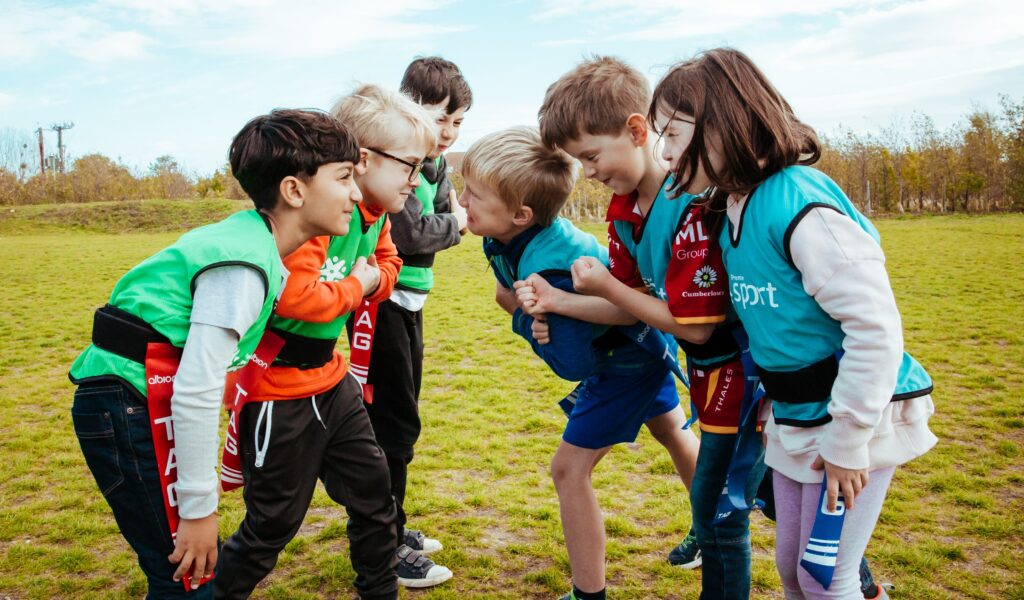
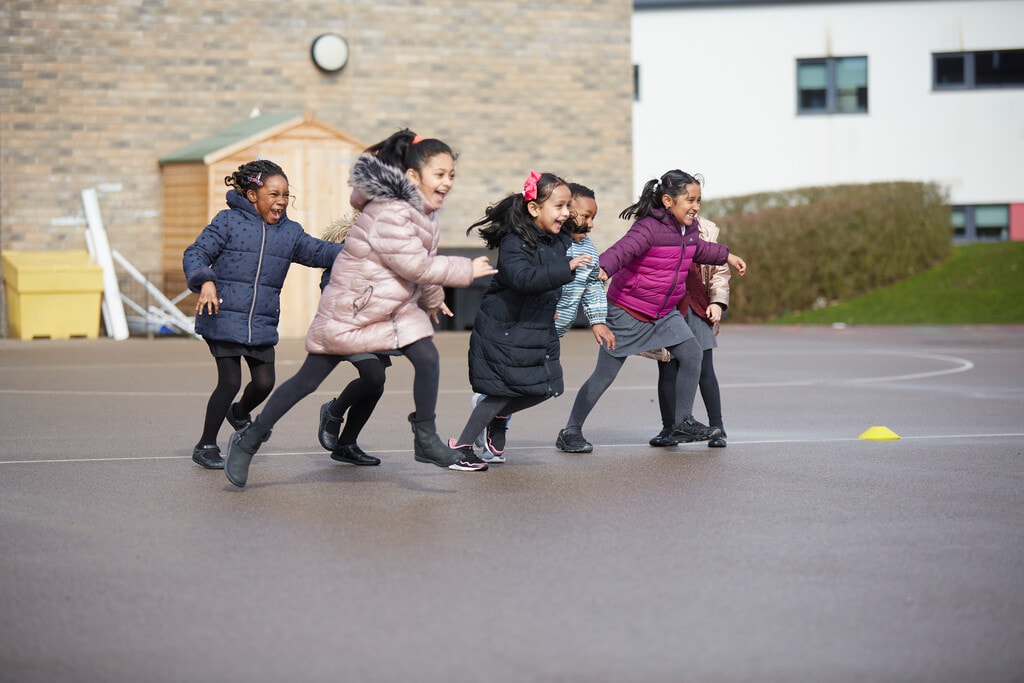
Hot dogs is a tag game, good for raising energy levels and blowing off steam. One student is the tagger, the other students run to try to evade them. When tagged, students must lie down on the ground; they can only rejoin the game when two other students lie down next to them, one on either side (like the two halves of a hot dog bun!).
Swap the tagger regularly; if the tagger manages to tag everyone, they have won.
Game 8: Game building
From Hocksockit to Skedaddles, let their imaginations run wild
Your approach to this game can vary depending on if there are specific learning objectives or skills you’d like to explore.
Lay out a wide range of PE equipment, for example, bats and balls, goals, hoops, bean bags, rackets. Split the students into small groups and challenge them to invent a brand new game. They can combine other games to create something new or think up a totally original idea.
Save time for demonstrations of the new games at the end.
Supporting teachers to breathe new life into PE provision
We hope this article gave you some inspiration for ways to refresh and enliven your PE lesson plans, but feel free to use our tips and guidance on effective PE planning for more ideas.
If you’re looking for sport-specific lesson plans to add to your sessions, check out our gymnastic activities or football games for kids.
For more expert support and resources for primary school teachers looking to enhance the quality of their PE sessions, get in touch today!
